



Andrew Jacobs, General Manager
Dental X-rays are used for a variety of purposes, but primarily they're used for diagnosing issues that your dental provider might not be able to see with their eyes. A lot of times at the end of your dental cleaning, you will get something called an examination or a periodic oral evaluation. That's when the doctor or your dental provider goes into your mouth with tools and he or she will visually inspect your teeth and the state of your gums.
However, a lot of the times there are issues between your teeth or along the root of your tooth hidden by your gums that the dentist really cannot see with their eyes or with any other tool. That is the main purpose of dental X-rays: to let the doctor see what they can't normally see with just their eyes and get a comprehensive look at your oral health.
What is a dentist looking for when examining X-rays?
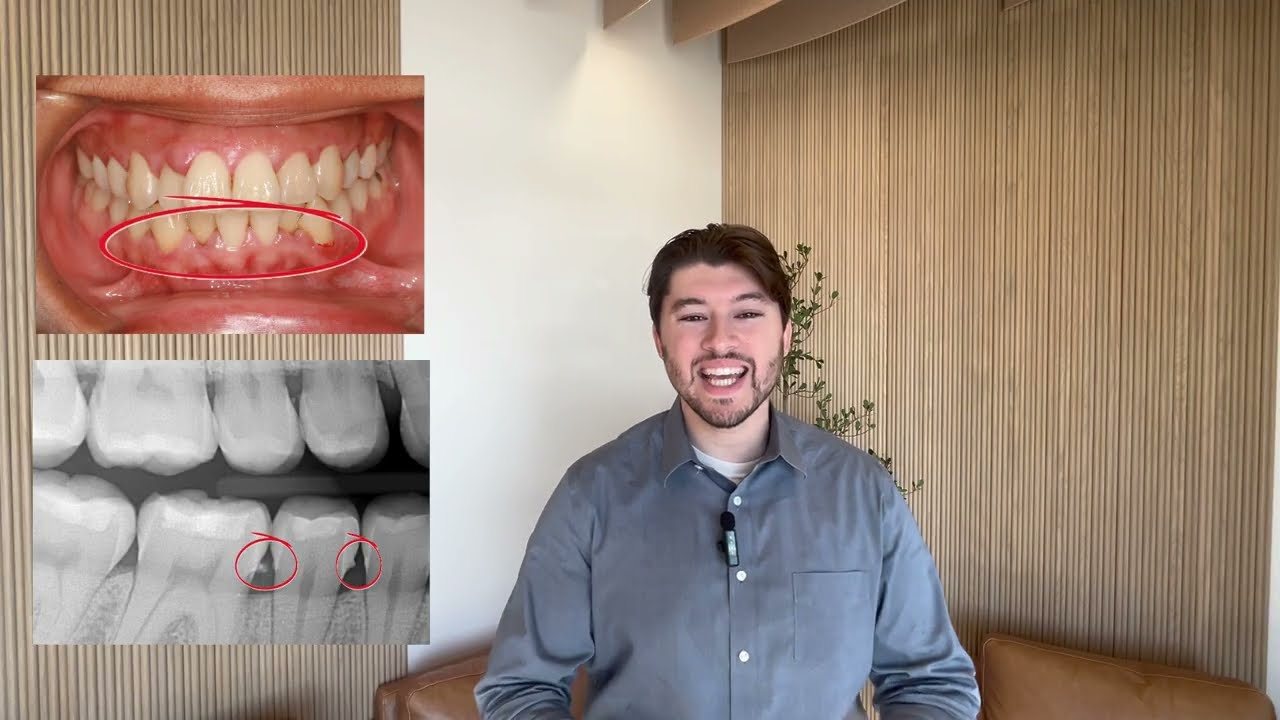
Primarily, they're looking for decay or any sort of issues along your gum line. Let's start with decay. A lot of the time your dentist will show you your X-rays on a screen and they will point out the different colorations on your tooth. The main issue they're looking for is any sort of shading where it shouldn't be. That typically means there's a hole or a cavity that needs to be filled.
Cavities are really not good for your tooth, as I'm sure you can guess. Bacteria live in that hole that's created and they can proliferate and eat away more of your enamel, getting closer to the nerve. You don't want to have that happen, so you want to make sure to get those little holes filled as soon as possible. Get your fillings. They will also look for any sort of swelling or inflammation along your gum lines.
Another thing a dentist is looking for besides just the shading on your tooth is along the root or the plane of your root. A lot of times patients come to us with inflamed, puffy gums. What the dentist is looking for is any sort of hardened plaque that's pretty sharp, poking the inside of your gum. You might have a cut or a lesion on the inside of your gum that's pressing along your tooth root caused by hardened calculus and plaque. Those really stand out on dental X-rays. If you have a lot of those, your dentist is probably going to recommend a deep cleaning.
Another major thing your dentist is looking for is any sort of active infection. Surprisingly enough, that will show up on a good number of X-rays. They're really looking along your nerve and the tip of your root. A lot of times if you have an active infection, you might have lots of pain and tenderness on your tooth itself. We can actually see the infection at the base of your tooth or along the nerve range.
What are the different types of X-rays used in dental practices?
There are many different types of commonly used X-rays in all sorts of dental practices. In a general dentistry practice such as Sea Summit Dentistry, we use pretty much all the X-rays. Some X-rays we take here are bite wings and PAS. We also take cone beams. I know that's all very technical, but let me break it down for you.
Your bite wings are when the hygienist or the dental assistant makes you close down and they take an X-ray from this side. What we're really looking for are your mers, pretty much.
Then there's another X-ray called a periapical, or PAS. Those X-rays are when the tabs go deeper along the roof of your mouth or deeper behind the tongue of your mouth. Those are really so we can get the entire tooth. (Bite wings do not get the entire tooth.) PAS do get the entire tooth. You can see from the root tip all the way down to the chewing part of your tooth. Very useful.
Another X-ray you'll commonly take is either a cone beam X-ray or a pano X-ray. They're pretty similar, but there is a big key difference. In our office at Sea Summit Dentistry, we typically only use cone beams. That is a standing X-ray that'll get an X-ray of your entire jaw. It's super important.
The most important thing to know is that it's 3D. Dr. Jacobs, the dentist here at Sea Summit Dentistry, can see your entire mouth all at once from all different planes. He can see from front to back, left to right, and everything in between. It's really a very advanced piece of machinery.
Are dental X-rays safe?
One of the biggest concerns patients have about X-rays is whether they are safe. Is it okay to be exposed to radiation? I can say that yes, X-rays are extremely safe. You are exposed to very, very small amounts of radiation, much less than you would expect.
A common phrase or example we use in the industry, which is true, is that you are actually exposed to more radiation walking underneath a power line than you are taking your X-rays during your dental checkup. Very safe. Modern-day X-rays, even for the past couple of decades, have really limited any sorts of excess radiation that we are exposing our patients to. Extremely safe.
Do I need to worry about the cost of dental X-rays?
Most patients do not need to worry at all about the cost of their dental X-rays. If you have insurance, most insurances pay really well for their X-rays. Relatively speaking, most of them are really cheap. You really shouldn't have to worry about the cost of your dental X-rays at all.
How can I schedule a dental X-ray at Sea Summit Dentistry?
If you are interested in having an X-ray taken here at Sea Summit Dentistry, you can definitely do that most of the time. However, if you're thinking that you need an X-ray taken of your tooth, that usually means you're having an issue with that area of your mouth. If you want to schedule yourself for a dental X-ray, you should probably schedule yourself for a dental exam as well. Most exams include an X-ray so that the doctor can see what's going on.
If you’re ready to schedule an exam or would like to learn more about our services, we’d love to hear from you. Call us at (949) 787-3378 or email [email protected]. We look forward to caring for your smile.